Is the Supreme Court Independent? – Keith Bessette
In a Nov. 12, 2026 interview by the Federalist Society, Supreme Court Justice Samuel Alito expressed concern about “preserv[ing] the independence of the judiciary.” Is the Supreme Court currently independent, and if so must it be preserved as independent? Or is the Court subject to the influence of Congress, the President, national party politics, and the people?
It can be comforting to think of SCOTUS as independent. We may feel warm and fuzzy considering the Court to be made up of knowledgeable, independent, deep thinkers offering opinions entirely based on the Founder’s words in the Constitution. It’s pleasant to believe the Justices understand and follow the Founder’s intents, well documented in their other writings of the period such as the Federalist and Anti-Federalist papers. One might prefer thinking of the Court as immune and separate from party politics. However, all US history and the Constitution shows this is not the case.
Never forget that the Supreme Court is actually made up of politically connected lawyers.
When new Justices are nominated by the President and confirmed by the Senate their political party and personal politics is at the top of the job requirements list. Justices are hand picked by politicians for their viewpoints on key issues. Having the “wrong” opinion on a few hot-button issues of the day held by the party in power is an automatic rejection for a seat on the bench. Any lower court history of making the “wrong” decision on cases involving current political squabbles means a candidate fails confirmation. If a candidate’s confirmation hearing answers violate the agenda of whatever party happens to be the majority in the Senate the door to the bench is slammed shut. A hard hit-your-butt-on-the-way-out slam, carried on national news ad nauseam by the “correct” viewpoint legacy media outlets.
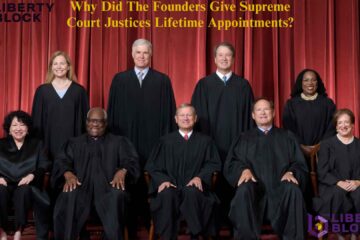
Additionally, the Supreme Court was not designed to be independent. The Founders made the Court subject to the checks and balances of the three branch system created by the States via the Constitution. Justice Alito recognizes this – in the Federalist Society interview Alito shows concern for Congress influencing the Court via funding control and the “many, many other things they can do.”
Alito’s concern that “Congress can turn off the lights at the Supreme Court” is valid. As attorney KrisAnne Hall pointed out years ago, if Congress wished to cut down on the mischief the Supreme Court was capable of it could change the Court to a single Chief Justice and put him in a broom closet with a card table and a candle.
Congress also has the power to remove individual Justices for bad behavior, a power delegated to Congress by the Constitution (Article III Section 1). While Alito might prefer to be independent, he can be fired because he has a boss.
The Founders did not wish SCOTUS to be independent. The Justices are dependent on the President for a nomination, the Senate for confirmation, and the House of Representatives for funding. Is the Supreme Court Independent?
Ultimately the Justices are dependent on the wishes of the people of these United States. The people via their states have control of the whole shebang – should they choose to exercise it.
If the people aren’t happy with the Supreme Court they could shut it down and try again with a new system better to their liking. The States created the Supreme Court by proposing and ratifying the proposed Constitution and delegating certain authorities to the Court. Delegation is a temporary assignment of authority from a higher power (the States) to a lower power (the federal government). If the people via their States wished to rescind these authorities they can fire every Justice, rewrite Article III, and create a new Justice branch more suitable to their needs.
Justice Samuel Alito is not independent; he has a boss. It is us.
This article does not necessarily reflect the opinions of The Liberty Block or any of its members. We welcome all forms of serious feedback and debate.
0 Comments